
Can Sidecars Fit Two Passengers? The Real Answer

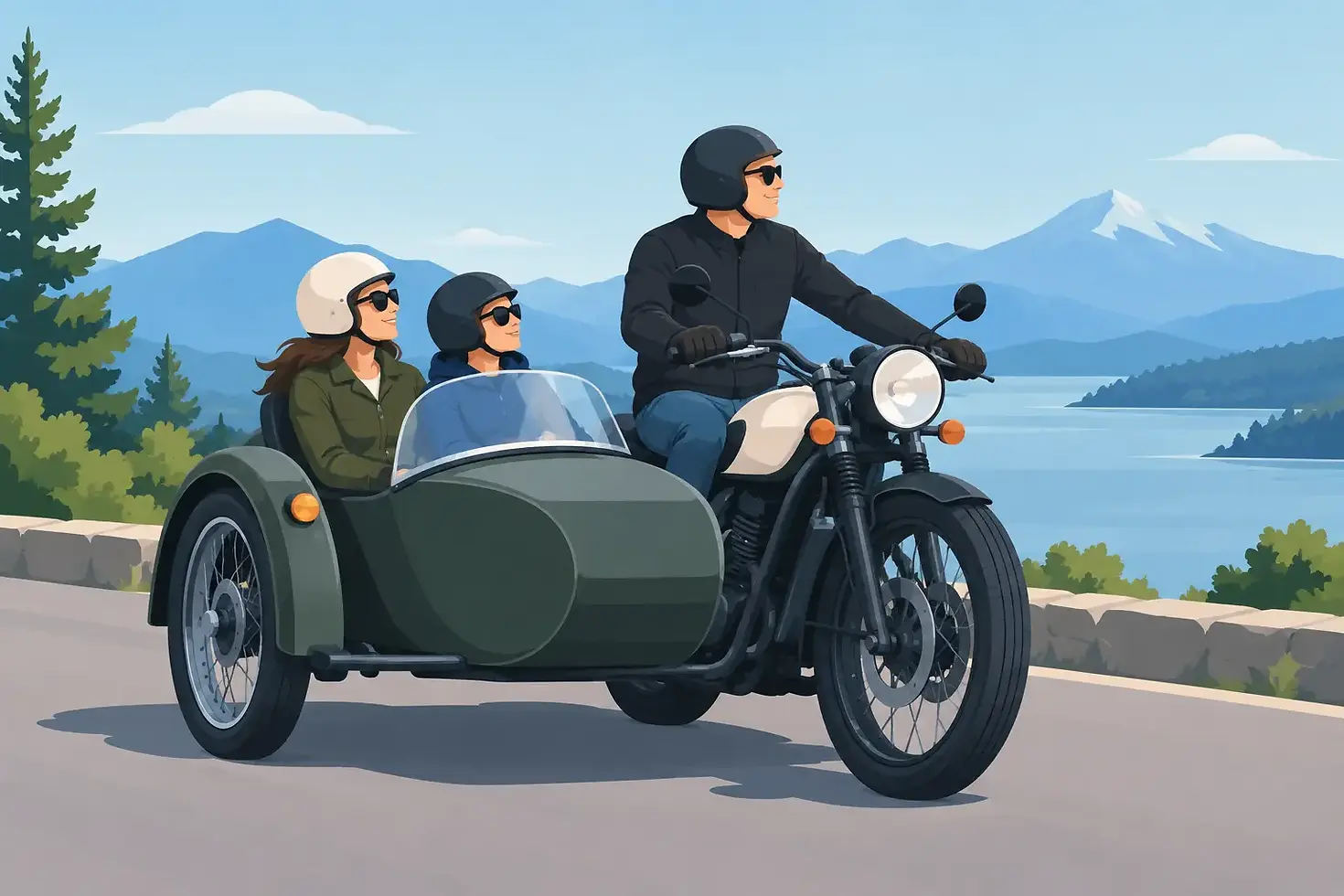
The question sounds simple until you picture the geometry: a vintage motorcycle, a low-slung sidecar, two adults in the passenger compartment, and the driver trying to negotiate a Parisian roundabout while a delivery van develops opinions. So, can sidecars fit two passengers? In almost every standard touring setup, no. A sidecar is designed for one passenger, while the motorcycle has one driver. That makes room for two people total, not two guests sitting side by side in the little capsule.
This is not a scam invented by the French to make couples buy more croissants. It is physics, safety, and the stubbornly compact charm of vintage machinery. A sidecar looks roomy in photographs because photographs rarely include knees, coats, handbags, or the unglamorous question of where a second adult’s elbow would go.
Can Sidecars Fit Two Passengers in One Car?
Most traditional motorcycle sidecars have one proper passenger seat. It sits beside the motorcycle, low to the ground and close enough to the street that Paris feels less like a museum and more like a moving film set. You can see the café chairs scraping the sidewalk, smell the butter escaping a bakery door, and watch a local dog judge your helmet with mild suspicion.
But it is a one-person seat.
A driver operates the motorcycle, and one guest rides in the sidecar. Some rigs may have a small rear perch or an arrangement that can carry an additional person in particular conditions, but that is not the same as saying two adult passengers can comfortably or safely share the sidecar. Those setups depend on the vehicle’s design, its approved capacity, local regulations, passenger size, route, and the operator’s safety rules.
If someone promises that two grown adults can squeeze into one classic sidecar for a proper city ride, ask a practical question: where, exactly, are their legs going? Romance is wonderful. Circulation is also wonderful.
Two travelers, one sidecar: the common confusion
Usually, people asking this question mean one of two things. They may be wondering whether a couple can ride together. Yes, absolutely - one person drives and one person rides in the sidecar. That works if one traveler is licensed, comfortable operating a motorcycle in city traffic, and the rental arrangement allows it.
On a guided sidecar experience, though, the driver is generally the professional guide. In that case, each sidecar carries one guest. Couples, friends, or family members who want to ride at the same time typically travel in separate sidecars, moving together as a small private convoy.
At first this can sound like a logistical nuisance. Then the engines start, you pull away from the curb, and it becomes oddly perfect. You are not crammed into the same tourist bubble, shouting over traffic and negotiating whose camera gets the window seat. Each person gets the view, the wind, and the ridiculous pleasure of being waved at by strangers.
And yes, you can still talk at stops. Paris has survived worse interruptions to romance.
Why Sidecar Capacity Is Not Just About Space
A sidecar is not a tiny car with a motorcycle attached. It behaves differently in turns, brakes differently, and responds to passenger weight differently. The driver has to account for the combined weight of the bike, sidecar, passenger, helmets, and whatever souvenirs have mysteriously appeared in your tote bag.
Putting two adults into a compartment built for one changes the ride in ways that are not especially photogenic. It can affect balance, comfort, braking, and the driver’s ability to make clean turns. It also raises the less glamorous issue of weight limits. Those limits are set by the vehicle manufacturer and should not be treated as a suggestion from a distant uncle.
There is a reason professional operators tend to be firm about capacity. A good guide wants you relaxed enough to look up at the stone lions, the zinc rooftops, and the astonishingly aggressive pigeons. They do not want to spend the ride calculating whether a sharp corner near the Seine will become a group exercise in regret.
What about children?
Children are a separate question, and the answer is still not automatically yes. Age, height, weight, local rules, helmet fit, and the operator’s policy all matter. A child who is legally permitted to ride may fit safely in a sidecar that would never accommodate two adults, but that decision should be made by the professional running the experience.
Do not assume that “small enough to fit” means “approved to ride.” Safety equipment has to fit correctly, and children need to be able to sit securely for the full route. Parisian cobblestones are beautiful. They are also remarkably committed to reminding everyone that they existed before your lower back.
How Couples Can Ride Together in Paris
For two adults traveling with a guided sidecar company, the best answer is usually two sidecars and two drivers. You leave together, stop together, and follow the same route, but each of you gets your own passenger seat. It is less like being separated and more like starring in the same slightly absurd French road movie.
One minute you are gliding past the Louvre while the glass pyramid does its usual excellent impression of being both ancient-adjacent and very 1980s. The next, you are tucked into a side street where laundry hangs above a florist and nobody seems especially impressed that the Eiffel Tower exists. That is the advantage of being above ground and mobile: the city connects between the famous places.
Separate sidecars also make the experience better for photography. The passenger has a clear line of sight and free hands, while the guide can choose routes that make sense for traffic rather than parking a bus the size of a suburban appliance beside a landmark. You can trade stories later about what you noticed. One person remembers the gold dome flashing between buildings; the other catches a chef smoking outside his restaurant in full whites at 10:30 a.m. Both are Paris.
For a proposal, anniversary, or a day when you would rather sit close than ride separately, there are other ways to build intimacy into the plan. Choose a private experience, ask for a thoughtful stop, and leave time for a drink or a long lunch afterward. The sidecar is the kinetic part. The lingering comes later, ideally somewhere with good bread and terrible lighting for selfies.
Before You Book, Ask These Questions
Capacity is only one part of choosing a sidecar ride. Before confirming, ask whether the tour is private, how many guests ride in each vehicle, whether your group will travel together, and what happens if the weather gets theatrical. Paris rain is usually less dramatic than people fear, but nobody wants to discover a cancellation policy while dressed for a cinematic open-air adventure.
Also ask about hotel pickup, accessibility needs, luggage, and children’s eligibility if those apply to your group. A professional operator should answer clearly, without vague phrases about “flexibility” that collapse the moment you ask where your suitcase goes.
If you are booking as a couple, tell the company what matters most. Maybe you want landmark photos. Maybe you have already done the Eiffel Tower and would rather chase quiet streets, food markets, and views that do not come with a line. Maybe one of you is nervous about motorcycles and needs reassurance that there is a certified driver, a proper helmet, and no expectation to perform bravery for Instagram.
That information helps shape the ride into something more personal than transportation with a funny silhouette.
The Better Way to Think About It
The real question is not whether two passengers can physically occupy one sidecar. With sufficient optimism, people have attempted much stranger things in Paris, including entering the Métro with a full-size houseplant during rush hour.
The better question is how you want to experience the city. If you want comfort, safety, and room to actually see what is happening around you, one passenger per sidecar is the sensible arrangement. It gives the driver the control they need and gives you the peculiar, childlike thrill of having a front-row seat to Paris in motion.
Take the separate sidecars. Meet again at the next red light, exchange a grin, and keep going. The city is much more interesting when nobody is folded in half.


